


Molybdenum Rod for Furnace, Semiconductor and Industrial Applications
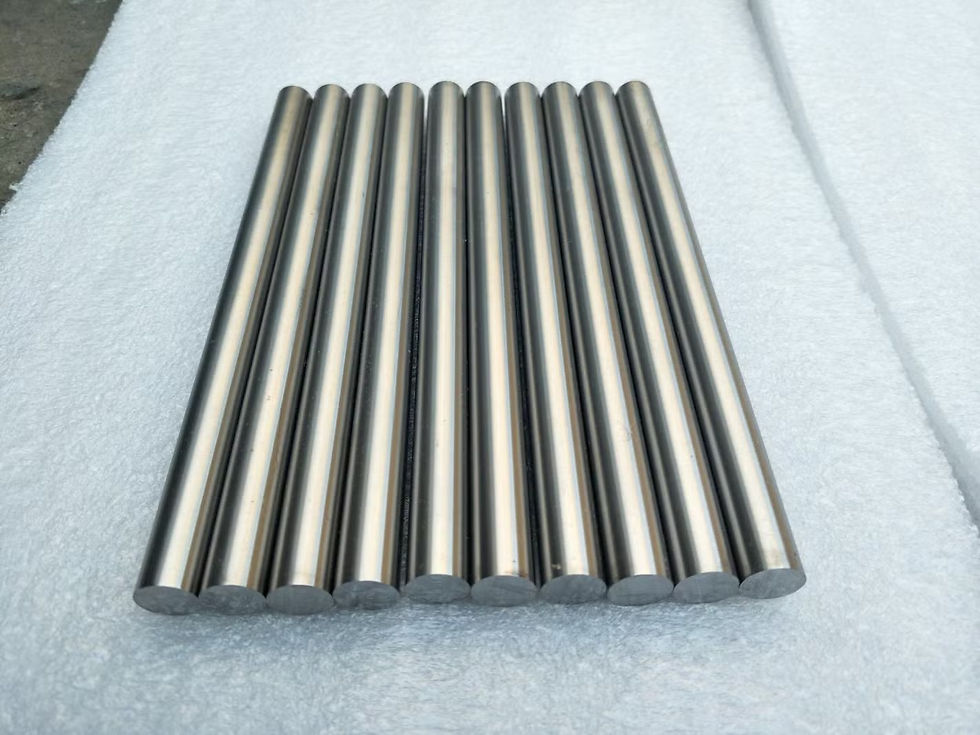
Certain materials are used in every application because they are inexpensive and easily manufactured. Molybdenum rod is not one of those materials; that is why it is used — when the environment gets hostile. Molybdenum rod is used in many furnace designs, semiconductor manufacturing, and heavy industrial equipment — it's everywhere, because it's where other metals begin to fail under high heat, corrosive environments, and close tolerances, plus where they last for a long time.
Why Molybdenum Rods Hold Up Where Others Don't
Outside the realms of furnaces and semiconductors, molybdenum rods find their use in a plethora of heavy industrial applications such as construction parts for high-temperature process equipment, wear-resistant machine parts, electrical contacts, and tooling applications, among others. Anytime there is a need for heat resistance and corrosion prevention, molybdenum rods have a place on the list. It's just the heat resistance and stability that makes molybdenum rods continue to appear in high-stress applications, rather than being phased out for cheaper alternatives.
Furnace Applications
Molybdenum rod is widely used in the manufacture of heating elements, support structure, hot-zone components and more within either a vacuum furnace or a high-temperature furnace. These are areas where the material will be required to withstand thermal cycling over time without cracking, warping or compromising the structure's strength. Molybdenum's thermal stability is ideal here — parts fabricated from molybdenum are far more likely to withstand thermal cycling than other materials are, and because furnace downtime is hard to plan, expensive, and undesirable, this fact is particularly important.
Semiconductor Applications
It's not just the heat that demands molybdenum rod, it's the exacting dimensional tolerances, resistance to contamination, and mechanical wear that must be met in the semiconductor manufacturing process. It is applied in wafer processing equipment, sputtering applications, and other high-precision components where even the slightest variation in the material can ruin a production run. Purity is also a crucial factor in this space as well: even minute quantities of contamination in the rod can affect the semiconductor process downstream. One of the reasons why semiconductor-grade molybdenum rod requires more testing for purity and quality than does grade for general industrial uses.
Industrial Applications
In structures, outside the furnace and semiconductors, molybdenum rods are used in a variety of heavy industrial applications such as high-temperature processing equipment, wear-resistant components of machinery, electrical contacts and specialty tooling applications, among others. When a part has to endure heat, withstand loads, and withhold corrosion and degradation over a number of years, molybdenum rod is likely to appear in the shortlist.
What Actually Determines Quality
Though molybdenum rod may appear the same on a spec sheet, it is not all the same. The degree of purity is an important consideration: trace impurities can reduce the performance of the rod under heat, or cause variations in important applications such as semiconductors. Grain structure is also important as it is formed during the drawing and processing of the rod and will directly impact strength and stress response. Surface finish and dimensional uniformity complete the list, particularly if the rod needs to fit tightly within the existing equipment or to meet strict tolerances along its length.
If a manufacturer has all of these factors tightly controlled, then she or he will be much more likely to get a product that is reliable than if the product is merely meeting a basic specification on the paper.
Choosing the Right Supplier
Because molybdenum rod ends up in applications where failure is expensive or outright dangerous, the supplier behind it matters just as much as the material itself. A reliable Molybdenum Rod Supplier should be able to provide documented purity levels, mechanical testing data, and a track record of supplying industries with genuinely demanding requirements — furnace manufacturers, semiconductor equipment makers, and industrial machinery producers aren't exactly forgiving customers, and a supplier who's earned their trust has usually proven their process is solid.
Conclusion
Molybdenum rod is not a commodity that you go out and buy because it's in fashion — it's a commodity that you buy because it is the only material that will withstand the extremes of use that it is designed for. Whether it's to hold up inside a furnace, or perform in semiconductor manufacturing, or resist the demands of heavy industrial use, the right molybdenum rod – from the right supplier – can be the difference between reliable, long-lasting equipment and equipment that continuously fails you at the worst possible moment.
FAQ
1. Why is molybdenum rod used in furnace applications? Its high melting point, low thermal expansion, and stability under repeated heating and cooling cycles make it far more durable in furnace hot zones than most alternative metals.
2. What makes molybdenum rod suitable for semiconductor manufacturing? It holds extremely tight dimensional tolerances, resists mechanical wear, and can be produced to very high purity levels — all of which matter enormously in wafer processing and sputtering applications where even trace contamination can affect results.
3. What temperatures can molybdenum rod withstand? Molybdenum has a melting point above 2,600°C and maintains its strength and dimensional stability well below that threshold, which is why it performs reliably in extreme high-heat environments.


Comments